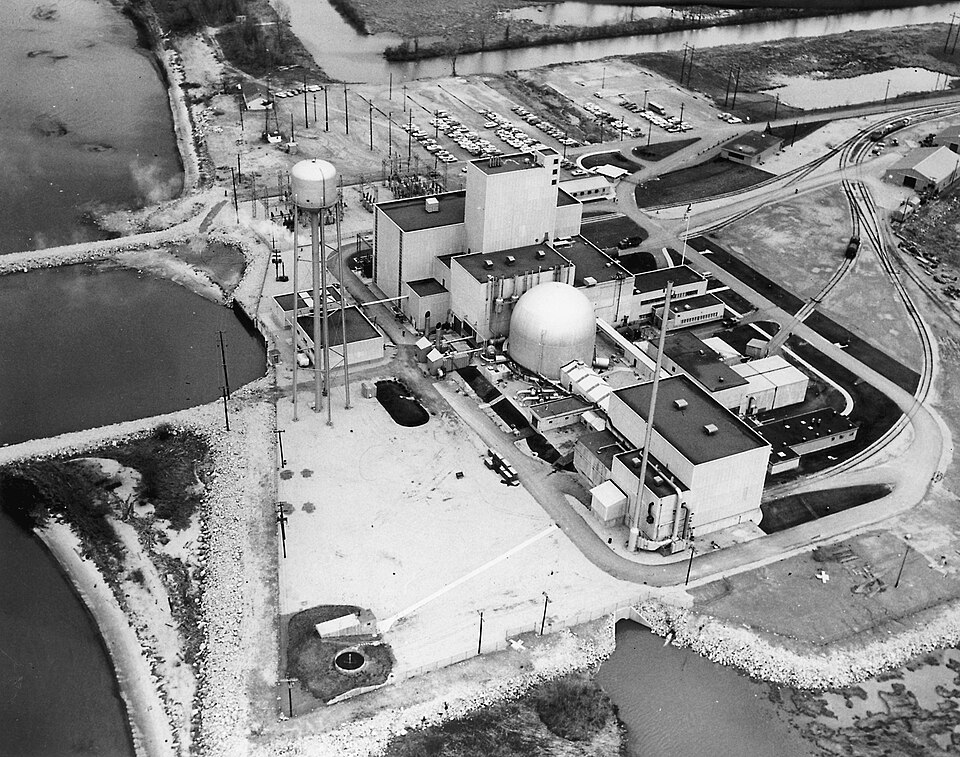
In the mid-1960s, Monroe County, Michigan, became the center of national attention after a serious accident occurred at the Enrico Fermi 1 nuclear power plant. Though the event is often remembered through the phrase “We Almost Lost Detroit,” the actual story is a mix of engineering challenges, quick response, and long-term lessons that still influence nuclear safety today.
Background: A New Era of Power
Construction of the Fermi 1 plant began in the late 1950s near Monroe, along the shores of Lake Erie. It was designed as an experimental fast-breeder reactor—an advanced type of nuclear reactor meant to create more fuel than it used. Supporters believed it could produce inexpensive, reliable electricity and help move the United States toward a more energy-secure future.
Fermi 1 went online in 1963. Because of its experimental nature, scientists, engineers, and federal regulators watched it closely. The plant became a symbol of American innovation, but also one of the most carefully monitored reactors in the country.
The Problem Starts
On October 5, 1966, operators noticed something was wrong. The reactor was showing unusual temperature readings, and power levels were not responding the way they should. Inside the core, two pieces of zirconium shielding had come loose and blocked the flow of liquid sodium coolant. Without proper cooling, part of the fuel began to overheat.
This overheating led to what is known as a partial meltdown. Only a small portion of the fuel melted, but the situation had the potential to become much worse if not handled correctly.
Inside the Control Room
As alarms went off, engineers quickly reduced the reactor’s power and shut it down. Their fast action prevented the problem from spreading. Even though no radiation escaped into the public environment, officials treated the situation seriously. Teams of specialists were brought in to inspect the reactor, analyze what happened, and figure out how to make the plant safe again.
Because Fermi 1 used sodium coolant—a substance that reacts violently with water or air—workers had to move slowly and carefully. The inspection and cleanup lasted many months.
Public Reaction
At first, the public knew very little about the accident. Nuclear power was still new, and utility companies and government officials were cautious about sharing information. Eventually, details came out, raising concerns about safety, oversight, and whether advanced reactor designs were too risky.
In 1975, journalist John G. Fuller published We Almost Lost Detroit, a book that described the meltdown and questioned America’s nuclear energy policies. The book brought the Fermi 1 accident back into national conversation and sparked debates that last to this day.
Aftermath and Shutdown
Although the plant was repaired and restarted in the early 1970s, it never lived up to its original expectations. Operating Fermi 1 was expensive and complicated, and by 1972 the decision was made to shut it down permanently. The experimental fast-breeder design never became a major part of America’s nuclear program.
Today, Detroit Edison’s newer plant, Fermi 2, stands next to the old site. Fermi 2 is a completely different type of reactor and remains one of the largest nuclear power plants in the United States.
What We Learned
The Fermi 1 partial meltdown taught the nuclear industry several important lessons:
Design matters. Engineers learned more about coolant flow, reactor materials, and how small pieces of equipment can cause major issues.
Safety must come first. The event helped strengthen federal regulations and improved training for nuclear operators.
Communication is key. The lack of early public information created distrust. Modern nuclear regulations now require faster and clearer communication during unusual events.
Experimental technology carries real risks. Fermi 1 showed that new concepts must be tested carefully before being used at full scale.
A Lasting Legacy
Although the Fermi 1 meltdown did not cause radiation injuries or widespread environmental harm, it left a powerful legacy in Monroe County and throughout the country. It remains an important chapter in America’s nuclear history—a reminder of both the potential and the dangers of advanced energy technology.
The accident pushed the industry toward safer designs, stricter oversight, and better public transparency. More than 50 years later, the story of Fermi 1 continues to be studied by engineers, historians, and local residents who want to understand how close the region came to disaster—and how careful action prevented one.