(Because This Really Isn’t That Complicated)
BY GRANT OVERTON
At a certain point, debates stop being about policy and start being about whether people are willing to understand basic facts. The Frenchtown data center proposal falls squarely into that category. When examined calmly and logically, the case for welcoming it is straightforward, practical, and almost dull in its common sense.
That dullness, apparently, is part of the problem.
1. The Location Is Not a Mystery
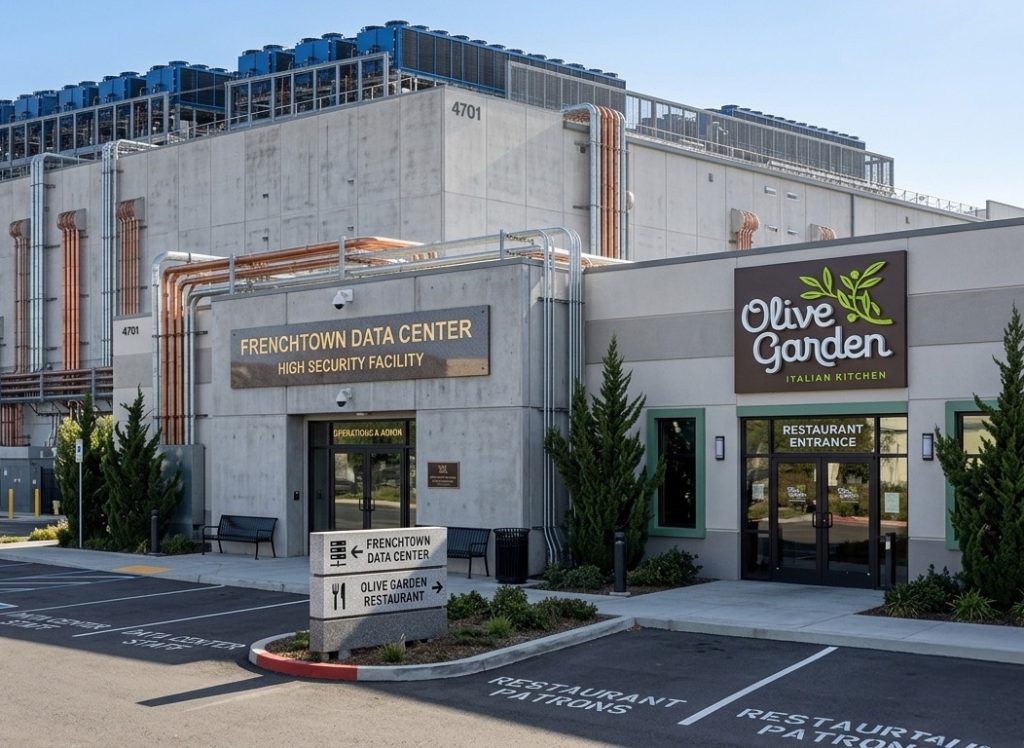
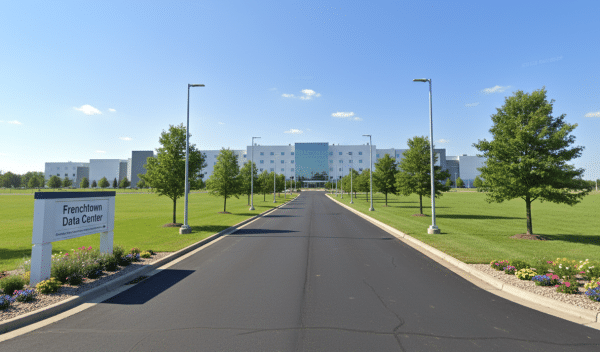
The site is isolated, industrial-adjacent, and already shaped by constant noise and infrastructure. Highways run nearby. Utilities are present. The ambient sound level is already dictated by traffic and existing development. This is not accidental—it is exactly why the site works.
Large infrastructure does not belong in quiet neighborhoods or pastoral settings. It belongs where infrastructure already exists. Acting shocked by this choice suggests unfamiliarity with how zoning, utilities, and land-use planning have functioned for the last century.
If the data center were proposed anywhere else, that would raise legitimate questions. Here, it simply follows the map.
2. Vacant Land Is Not a Sacred Relic
The property is vacant. It has been vacant. It produces nothing, employs no one, and contributes virtually nothing to the community. Treating empty land as inherently virtuous requires confusing “unused” with “valuable.”
Land does not serve a community by merely existing. It serves a community when it supports services, infrastructure, and stability. Leaving a parcel untouched indefinitely is not preservation—it is just refusing to decide anything.
The idea that doing nothing is somehow wiser than doing something productive is comforting, but it is not an economic strategy.
3. Closed-Loop Cooling Is a Solved Problem
Closed-loop cooling is not a buzzword. It is not a gamble. It is not a theoretical promise. It is a standard engineering solution used specifically to control water usage and operational risk.
Data centers are built by companies that obsess over efficiency, predictability, and uptime. They do not guess. They model, test, and monitor. The systems proposed here exist precisely because uncontrolled resource use is bad for business.
Reacting to modern cooling systems as if they were improvised experiments suggests a strong emotional response paired with a weak understanding of contemporary industrial design.
4. Tax Revenue Without Added Population Is About as Clean as It Gets
The project brings substantial tax revenue without bringing thousands of new residents who require new schools, expanded roads, or increased municipal services. This is the rare case where a community gains financially without growing physically.
Municipalities routinely struggle to balance budgets while managing growth. Here, revenue arrives without that balancing act. Complaining about that arrangement implies that the objection is not about impact, but about reflexive opposition to anything new.
It is difficult to argue for better services while objecting to one of the few developments that funds them quietly.
5. Jobs Don’t Need to Be Loud to Be Real
The data center will create construction jobs immediately and long-term skilled positions in operations, maintenance, security, and technical services. These are stable, well-paying roles tied to infrastructure designed to last decades.
Dismissing these jobs because they don’t arrive in overwhelming numbers misunderstands how local economies actually function. No serious community relies on one project to do everything. Progress happens incrementally, whether people like that or not.
Expecting perfection before permitting progress guarantees stagnation.
The Unavoidable Reality
Data centers already exist everywhere people expect modern life to function. They power communication, healthcare systems, logistics, finance, and entertainment. They are not optional. They are foundational.
The only real question is whether Frenchtown hosts one responsibly—or continues using the services they provide while insisting the physical footprint belong to someone else.
This project uses vacant land, existing infrastructure, modern technology, and private investment to generate revenue and jobs with minimal disruption. That is not controversial. It is textbook.
The confusion surrounding it says far more about how people process change than it does about the project itself.