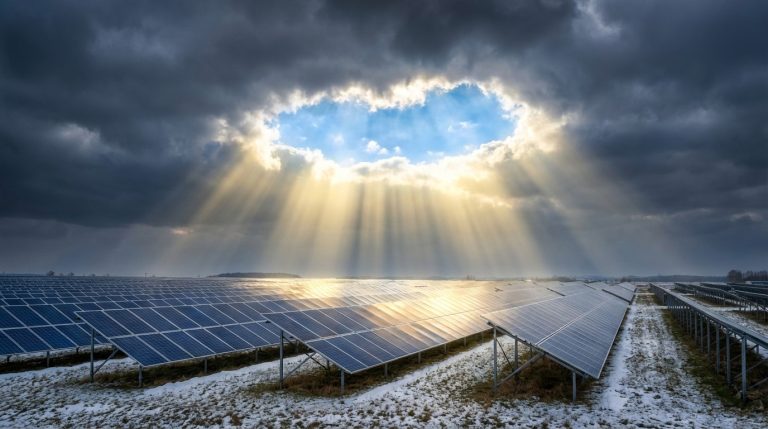
MONROE COUNTY, MI — Monroe County officials announced plans this week for a new solar project that they say is not designed to generate electricity, but to increase the number of sunny days experienced in the region—especially during Michigan’s long, gray winters.
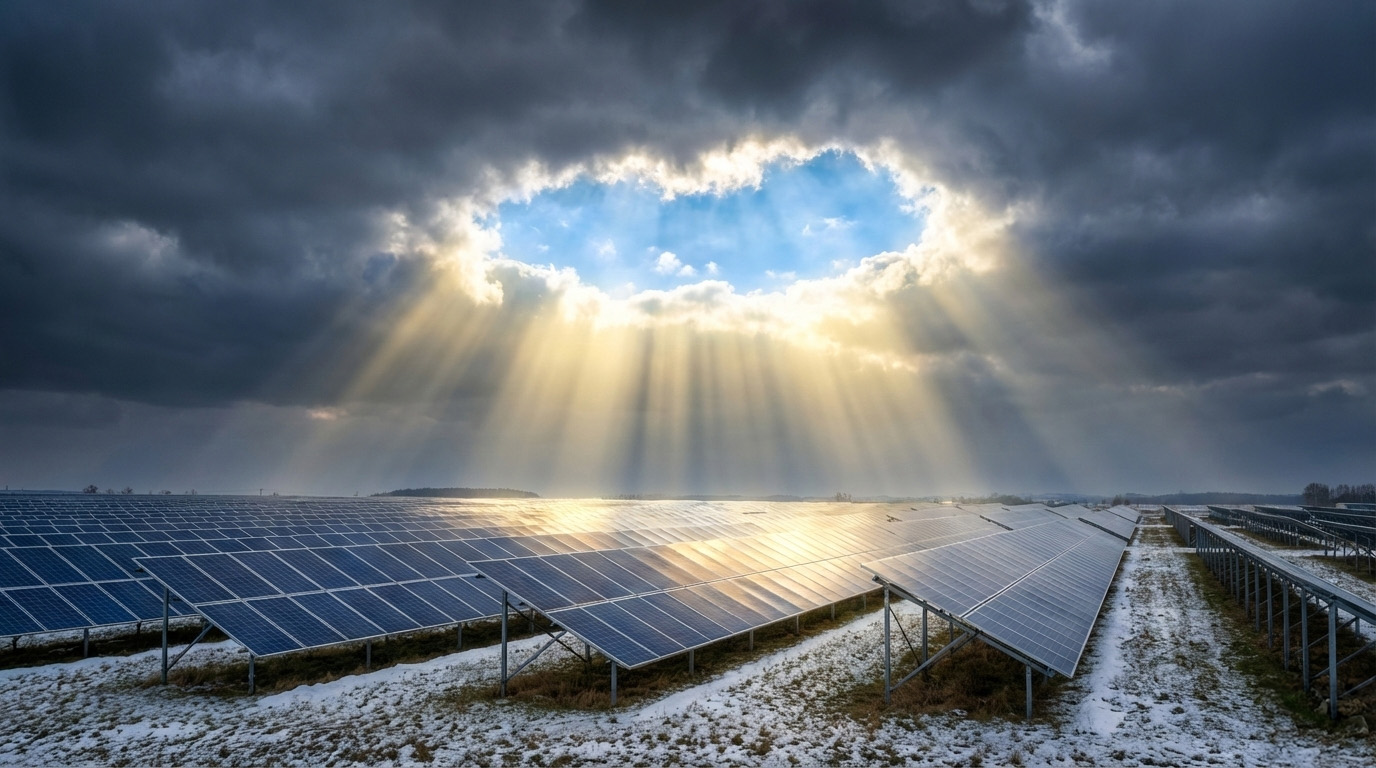
The proposal would place thousands of large solar panels across several hundred acres in Fenchtown Township near Lake Erie. Unlike traditional solar farms, this project would not feed power into the grid. Instead, officials say the panels would absorb excess cloud-filtered light and reduce what they call “regional gray saturation.”
“This project is about improving atmospheric conditions,” said county sustainability coordinator Paul Whitman. “Not power. Light. Specifically, more of it.”
YOU MIGHT LIKE


How Cloudy Is Southeast Michigan?
According to regional climate data, Southeast Michigan experiences some of the cloudiest conditions in the country.
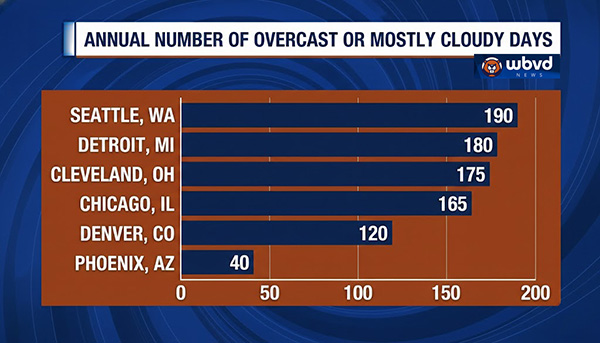
Detroit consistently ranks near the bottom for sunshine among large cities, averaging only 70–75 mostly sunny days per year.
“That’s not a perception problem,” said Dr. Elaine Forsyth, an environmental systems consultant. “That’s math.”
WBVD Meteorologist Rex Weinhauf remarked, “I’ve been tracking clouds in this area for 22 years, and I can confirm they are extremely comfortable here. This project appears to be asking them to leave.”
Winter Is the Main Target
The proposed solar farm is specifically designed to operate during winter months, when cloud cover increases and daylight hours shrink.
From December through February, Monroe County often goes weeks without a clearly sunny day, a condition officials say affects mental health, productivity, and the ability to remember what the sun looks like.
How the Solar Farm Would “Create” Sunny Days
County documents describe the panels as “light-absorbing atmospheric stabilizers.” The theory is that large dark surfaces absorb scattered light and warmth, reducing cloud persistence and encouraging breaks in overcast conditions.
Officials estimate the project could result in the equivalent of 30 to 40 additional sunny or partly sunny days per year.
“These are not beach days,” Whitman clarified. “These are ‘you notice shadows’ days.”
The Science (As Explained Carefully)
Solar panels absorb radiation. Absorbed radiation increases surface temperature. Changes in surface temperature can affect air movement near the ground. Air movement affects clouds.
“That’s not controversial,” Forsyth said. “That’s basic atmospheric science. The controversial part is how much impact this will have.”
She stressed that the project is not claiming to control weather, but rather to “slightly influence local conditions in a favorable direction.”
“Think less ‘weather machine,’ more ‘nudge,’” she said.
Snow, Reflection, and Brightness
Snow plays a key role in the county’s argument. Snow reflects sunlight, increasing overall brightness even on cloudy days. When combined with absorbing panels, officials believe this will reduce light scatter and create what they call “functional sunshine.”
Cost of the Study and Project Location
According to county planning documents, the proposed solar-based “sunny day enhancement” project would be built on approximately 1,200 acres in Frenchtown Township, just west of Lake Erie in Monroe County. Officials said the location was selected because it already experiences “consistently low sunlight outcomes,” making it “an ideal environment for improvement.”
Before any panels are installed, the county has approved $3.4 million in taxpayer funding for a multi-year feasibility and atmospheric behavior study. The study will examine cloud persistence, winter light diffusion, snow reflectivity, and what researchers refer to as “regional optimism metrics.” Officials stressed the research phase is critical to determine whether future sunny days can be reasonably attributed to the project, or whether they would have happened anyway.
If the study clears all benchmarks, the full buildout of the 1,200-acre site is projected to cost approximately $410 million, to be funded through a mix of public financing, state grants, and what one official described as “a strong belief in progress.” County leaders clarified that the project is not intended to generate electricity, revenue, or measurable warmth, but rather to produce “statistically noticeable improvements in daylight conditions.”
“This is not about power,” said one county administrator. “It’s about vibes.”
Officials added that long-term benefits could include improved winter morale, fewer seasonal complaints at township meetings, and a measurable decline in residents asking whether Michigan is legally required to have a sun.
Public Response
Reaction has been mixed.
“If it makes winter feel shorter, I don’t care what they call it,” said Monroe resident Karen Ellis.
Others remain doubtful.
“I’ll believe it when I see the sun in January,” said local resident Mike Turner. “And I mean see it.”
What’s Next
The project will undergo environmental review and public comment later this year. County officials emphasized that the plan complies with all state and federal regulations, including those governing things that technically cannot change the weather.
“We’re not promising blue skies every day,” Whitman said. “We’re promising fewer gray ones.”
If approved, construction could begin next year, with the first officially “created” sunny days expected the following winter—assuming clouds cooperate.