A Small Oregon Town Becomes Ground Zero for America’s Biggest Education Fight
HARBORVIEW, OR – Picture this: a quiet school board meeting in a small Western Oregon town turns into an absolute battleground over one simple question—how should we teach kids about history? What started as a curriculum update has become the kind of drama that’s got neighbors arguing over backyard fences and parents writing strongly-worded emails at two in the morning.
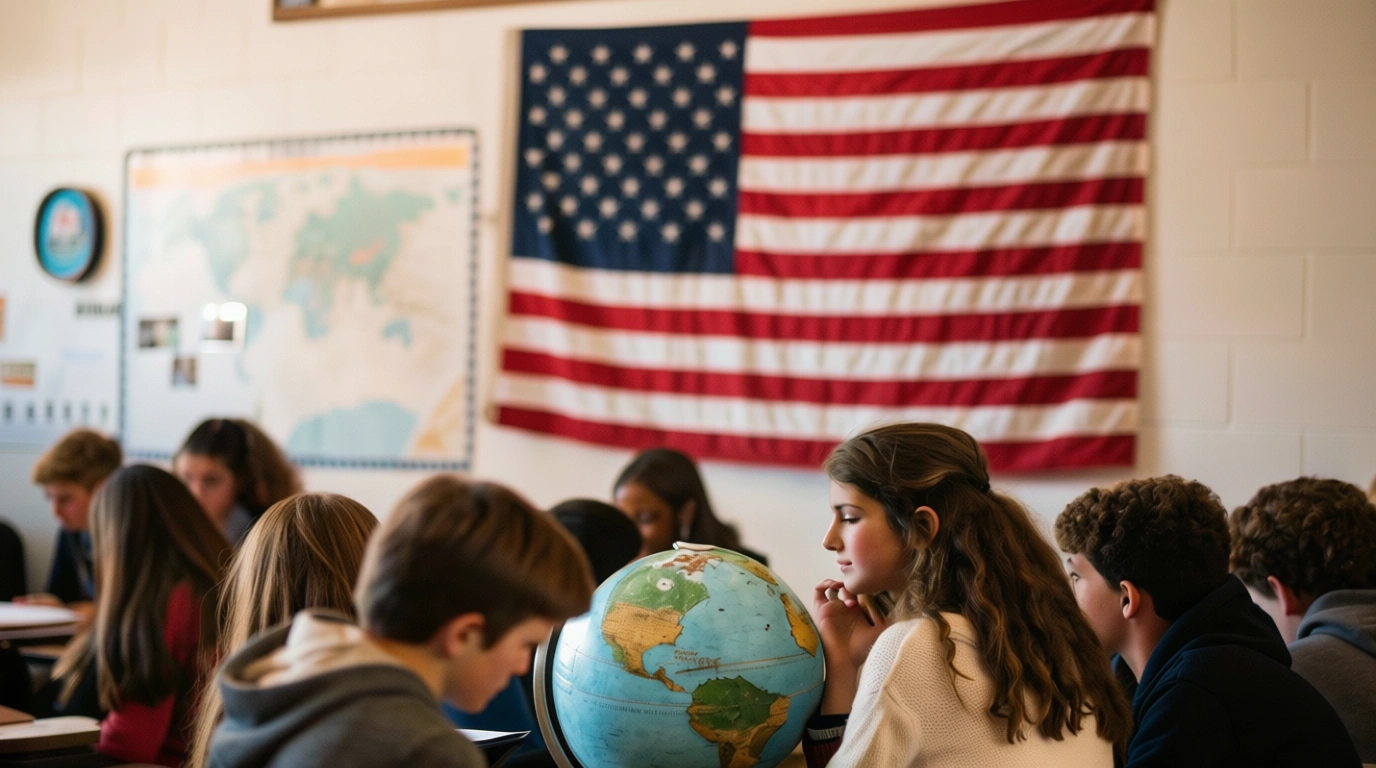
The Harborview Unified School District just voted 4–3 to ditch their classic “American History” class and replace it with something called “Global History Framework.” And let me tell you, people have feelings about this.
So What’s Actually Changing?
Here’s the deal. Starting next fall, every junior at Harborview High School will take this new course instead of the traditional American History class their parents and grandparents probably sat through.
Now, before anyone starts panicking, the district swears up and down that American history isn’t getting tossed in the garbage. The Revolutionary War? Still in there. The Civil War? Yep. Civil rights movement? Absolutely. The difference is that now these events will be taught alongside what was happening in the rest of the world at the same time.
Superintendent Claire Moreno tried to calm everyone down by explaining the thinking behind the change.
“We are not removing American history. We are placing it in context. Students should understand how the United States fits into the larger global story.”
The new curriculum will have students comparing different countries’ political systems, looking at how economies work around the world, and examining social movements that happened on multiple continents. There’s also going to be lessons about colonialism, global trade, and international conflicts.
Basically, instead of just learning that the American Revolution happened in 1776, students might also learn what was going on in France or China at the same time and how everything connected.
Parents Are Not Having It
If you thought this change would slide through quietly, think again. A whole bunch of parents showed up to school board meetings absolutely ready to throw down.
Daniel Brooks, a Harborview dad, didn’t mince words about his frustration.
“My kids should learn about their own country first. This feels like American history is being pushed aside.”
And he’s not alone. Plenty of parents are worried that shrinking the focus on America means their kids won’t appreciate their own nation’s story.
Another parent, Lisa Hammond, raised concerns about how this global perspective might be taught.
“I’m concerned about how this will be taught. History shouldn’t make students feel ashamed of where they live.”
This fear—that a global framework might end up making America look like the bad guy—has become a major talking point for parents opposing the change.
The “America First” Crowd Weighs In
As news of Harborview’s decision spread beyond the small Oregon town, national voices jumped into the fray. And some of these takes are… well, they’re really something.
Chuck “Liberty” Patterson, host of the YouTube show Real American Classroom, drove all the way from Idaho to attend a Harborview school board meeting. He had this to say:
“You want my honest opinion? This is how it starts. First, they teach your kids about ‘global context,’ and next thing you know, little Timmy comes home speaking French and asking for croissants instead of freedom toast. It’s a slippery slope, folks.”
When a reporter pointed out that French toast isn’t actually called “freedom toast” anymore (that was briefly a thing back in 2003), Patterson shook his head dismissively.
“That’s exactly what they want you to think.”
Meanwhile, Brenda Sue Hollister, founder of the Facebook group “Homeschool Patriots United,” shared her thoughts in a viral post that’s been shared over 40,000 times:
“Why do our children need to learn about other countries? We already WON. America is the greatest nation on Earth, and that’s not up for debate. Teaching kids about how other places do things is just confusing them. Next they’ll want to learn metric, and I’m sorry, but I don’t measure freedom in kilometers.”
Hollister’s post encouraged parents to demand their children be exempted from the new course, though district officials have stated no opt-out provision exists since the class fulfills state graduation requirements.
Perhaps the most memorable response came from Dale Rumford, a local Harborview resident who showed up to a board meeting wearing a shirt that read “1776 > Everything Else.”
“My great-great-great-granddaddy fought in the Revolutionary War so that my kids could learn about that war, not whatever was happening in some other country at the time. You know what was happening in other countries? They were losing to US. End of lesson. Class dismissed.”
When asked if he’d reviewed the actual curriculum changes, Rumford admitted he had not.
“I don’t need to read it. I can smell globalism from a mile away.”
Teachers Say Everyone Needs to Chill
Meanwhile, the people who will actually be teaching this stuff are trying to lower the temperature a bit.
Michael Tran, a history teacher at Harborview High who helped design the new course, pushed back on the idea that this is some kind of anti-American agenda.
“This isn’t about criticizing America. It’s about helping students see cause and effect on a global scale.”
Teachers involved in creating the curriculum say the goal is to help students become better critical thinkers by showing them how events in one country can ripple across the world.
“History doesn’t happen in a vacuum,” explained another teacher who asked to remain anonymous. “When we teach the Great Depression, it’s helpful for students to understand that it wasn’t just an American thing—it affected economies everywhere. That’s not unpatriotic. That’s just accurate.”
Some Students Are Actually Excited
Here’s the thing adults sometimes forget: the students themselves have opinions about their own education. And surprisingly, a lot of them seem pretty into this change.
Sofia Martinez, a junior at Harborview High, spoke during public comment at a board meeting.
“We already learn bits of American history in middle school. This sounds more connected to the real world.”
Other students pointed out that understanding global events might actually be useful considering they’re going to graduate into, you know, a global economy.
“I want to work in international business someday,” said another student, Derek Yoon. “Learning about how different countries work seems pretty important for that.”
The Bigger Picture
Harborview isn’t the only place wrestling with these questions. All across the country, school districts are rethinking how they teach history. Some places are adding more diverse perspectives. Others are pulling back on certain topics. It’s become one of the most heated debates in American education.
“We’re seeing a nationwide conversation about what history education should look like in the 21st century,” says Dr. Rebecca Morrison, an education policy researcher at UCLA. “Communities are genuinely divided on whether schools should prioritize national identity or global awareness—and honestly, there might not be a one-size-fits-all answer.”
Harborview officials insist their new course meets all state requirements and still gives American history plenty of attention. They’ve promised teacher training sessions this summer and have invited parents to review lesson plans before school starts.
The Fight Isn’t Over
Despite the school board’s decision, opposition isn’t backing down. A petition demanding the board reverse its vote has already gathered more than 1,200 signatures, and more names are being added daily.
Some parents are even talking about running for school board themselves in the next election.
“This isn’t the end of the conversation,” said Daniel Brooks. “We’re just getting started.”
For now, the Global History Framework is moving forward. But in Harborview, Oregon, the debate over whose story should come first is just heating up.
What Happens Next?
Only time will tell whether this new approach helps students become more informed global citizens—or whether the backlash forces the district to reconsider. Either way, Harborview has accidentally become a symbol of one of America’s biggest ongoing arguments.
And if history teaches us anything, it’s that people really don’t like change.